Showing posts with label farm. Show all posts

Monday, November 23, 2020

A Bounteous Harvest: A Midwest Musing


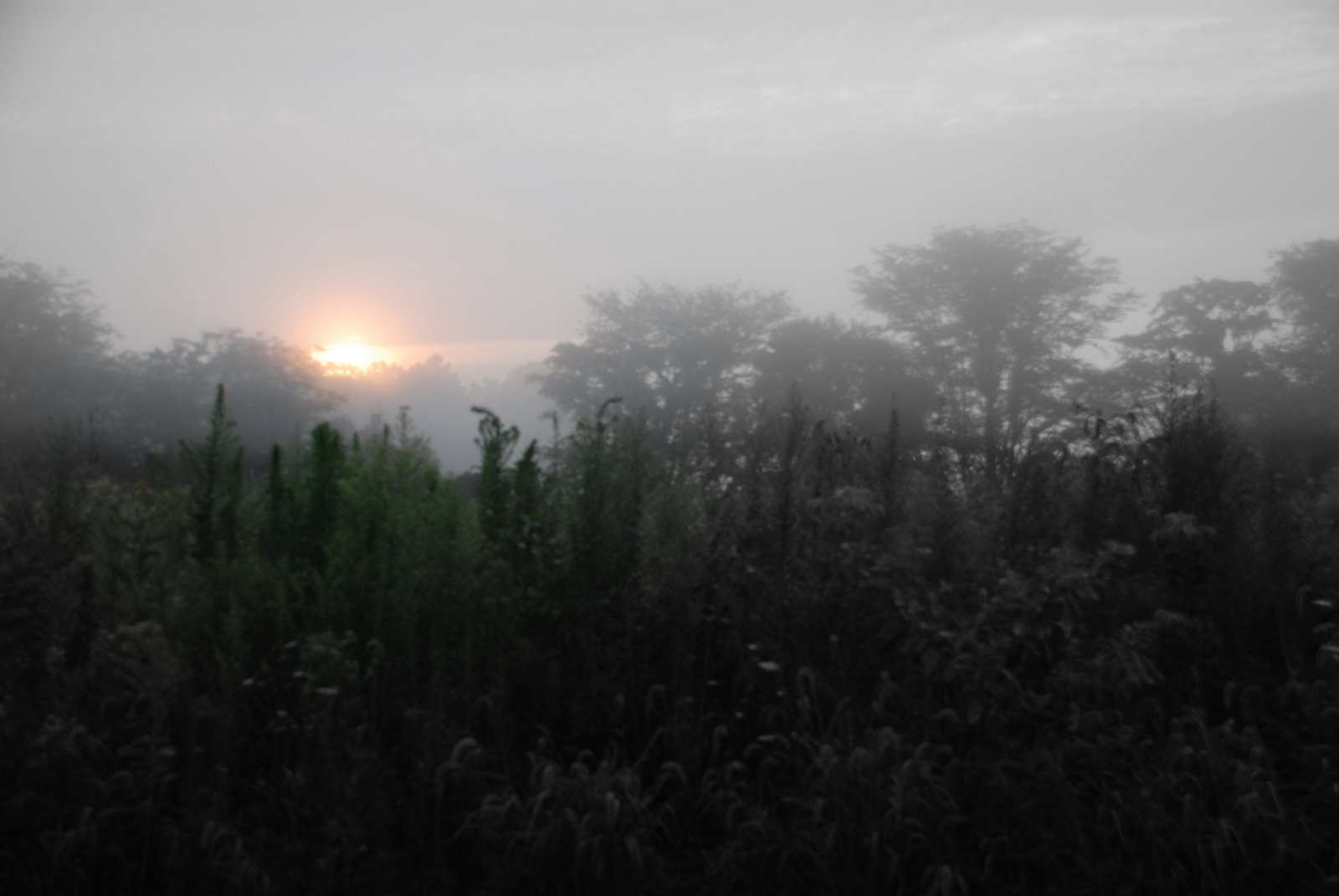
This is the time of year I love living in the Midwest, more than summer, spring or winter, which each have their own charm. But fall has a particular beauty. The landscape is alive with wonderful color, and I don’t just mean the trees in places like hilly, forested Brown County, Indiana. I mean the fields and woods that adorn the countryside.

The sunlight is softer, this time of year. And this softer light is golden, transforming the ordinary into extraordinary, helping me see the richness of life around me.

That’s why I love taking Nancy for rides around Indiana at this time of year. We get in our pick-up and drive and watch the light play across the countryside – field stubble casting shadows along the dirt, bare black tree limbs silhouetted against a royal blue sky, clouds puffy and white floating serenely along. .

I feel a sense of connectedness with the land and that sense grows stronger every year. I was born and raised in the city and I often proclaim the wonders of that existence compared to that of my country cousins. But the fact is I loved visiting the farms of our rural families. And my father was a tramper of fields and forests. We often were out and about.

That’s one reason I am happy about where I live. Seventeen years ago, the home site was a tangle of briars, thorn trees, and poison ivy all tangled in old fences. My dad, my sons-in-law, and I began clearing all that Thanksgiving weekend, getting ready for building. We worked in the rain and mud and cold and snow. We cut, we sawed, we pulled bushes out with the tractor. All through that work, I smelled the scents of farm and field – clumps of mud clinging to boots, wood smoke from burning limbs.

Then, as the house was being built, I’d hike back and work, watching the seasons move through – budding spring, humid summer. Now we’re sixteen years in the house, and watching fall ebb, knowing winter is coming.

I love it. And more than that, this move and this time of year helps me remember that I am connected to God’s good earth all the time – from witnessing it’s visual beauty to partaking of its sustenance with every mouthful of food I eat.

God’s faithfulness, to me, is evident in the changing seasons. Crops are planted, grown, and harvested. The soil rests over winter. Though the face of the earth changes, God does not. God watches over it all, and has for eons, and is faithful.

I question that at times. Sometimes when life is good, I imagine that it is good solely from the sweat of my brow or my own efforts. After all, I cut those trees and mowed the field for the view – not God – forgetting that all I have comes by the grace of God in the first place.

Sometimes I question it, out of my troubles, like Job. Like in this time of COVID. I wonder if it is true and try to understand the mind of God. Then I read God’s questions to Job – “Where were you when I laid the earth's foundation? Tell me, if you understand. Who marked off its dimensions? Surely you know! Who stretched a measuring line across it? On what were its footings set, or who laid its cornerstone -- while the morning stars sang together and all the angels shouted for joy?”

“Have you ever given orders to the morning, or shown the dawn its place, that it might take the earth by the edges?… Have you journeyed to the springs of the sea or walked in the recesses of the deep? Have you comprehended the vast expanses of the earth? Tell me, if you know all this.”

God asked Job these questions because it was important for Job to remember that God was not his enemy. This encounter with the Lord was not to say why Job was suffering, but to learn, by faith, that God was his Creator, Sustainer, and Friend.

This is something I forget, but the Psalmist continually reminds me that the earth does not. “Let the heavens rejoice, let the earth be glad;” the psalmist sings, “let them say among the nations, ‘The LORD reigns!’ Let the sea resound, and all that is in it; let the fields be jubilant, and everything in them! Then the trees of the forest will sing, they will sing for joy before the LORD, for he comes to judge the earth. Give thanks to the LORD, for he is good; his love endures forever.”

Singing trees, jubilant fields – these things we take as poetic language. Things that don’t really happen. Or do they? Could it be that the golden light that transforms field trash into something of beauty is a way the fields are being jubilant, reflecting God’s light back to him? Could the graceful, waving naked limbs of trees be hands uplifted in praise to God? Maybe that’s all bit a mystical, yet I can always use a bit more of the mystery in my lives, for my truest encounters with God are more than slightly mysterious.


Of course, what makes the countryside beautiful and rich are the memories it evokes. And inevitably entwined in those memories are people. The people in whose woods I walked. The families whose haylofts I played in – and fell out of. The folks, past and present, who molded my life. I remember Mom and Dad, Grandpa and Grandma Bill, Uncle Johnny, Uncle Burt, Aunt Orie, cousin Ernie, and on and on. A parade of Sunday school teachers, youth group leaders, and pastors also march past. As do people from the present. Not a farmer myself, the seasons of my life have been blessed by a rich bounty of people, not crops. And I am richer for them all. They have been the jubilant fields and singing trees, singing “for joy before the LORD, for he comes to judge the earth. Give thanks to the LORD, for he is good; his love endures forever.” They planted the seeds of faith in my life and watered them and watched them grow. Some of them – too many of them, for me -- have sung the song of harvest home. Some I get to see daily. Regardless, they all continue to bless me. They speak to me in the deepest parts of my soul.


For me, God’s land and God’s people are intricately interwoven. Even those of us who rarely venture outside the city limits are tied to the earth by strong bonds and a bounty of people. And this season is about giving thanks for that bounty to the gracious God who loves us more than we can imagine.

I came across a thanksgiving poem the other day that expresses that thought better than I am able. It’s by Max Coots and says:
Let us give thanks for a bounty of people.

For children who are our second planting, and, though they grow like weeds and wind too soon blows them away, may they forgive us our cultivation and fondly remember where their roots are.
Let us give thanks; For generous friends ... with hearts ... and smiles as bright as their blossoms;

For feisty friends as tart as apples;

For continuous friends, who, like scallions and cucumbers, keep reminding us that we've had them;

For crotchety friends, as sour as rhubarb and as indestructible;

For handsome friends, who are as gorgeous as eggplants and as elegant as a row of corn, and the others, as plain as potatoes and as good for you;

For funny friends, who are as silly as Brussels sprouts and as amusing as Jerusalem artichokes, and serious friends, as complex as cauliflowers and as intricate as onions;

For friends as unpretentious as cabbage, as subtle as summer squash, as persistent as parsley, as delightful as dill, as endless as zucchini, and who, like parsnips, can be counted on to see you throughout the winter;

For old friends, nodding like sunflowers in the evening-time, and young friends coming on as fast as radishes;

For loving friends, who wind around us like tendrils and hold us, despite our blights, wilts, and witherings;

And, finally, for those friends now gone, like gardens past that have been harvested, and who fed us in their times that we might have life thereafter;

For all these we give thanks.

 May I give thanks, this holiday time, for golden light, good friends, and God’s graciousness. May I open our eyes to jubilant fields and singing trees. Soaring clouds, be they white or gray with rain. Winds warm or chilled by the north. People who are made in God’s own image. Let me give thanks and “sing for joy before the LORD. Give thanks to the LORD, for he is good; his love endures forever.”

Monday, May 21, 2012

Fifty Acres and a Fool: Rain and Redemption

"No rain in sight."  Hmmm.  How my perspective on that phrase has changed.

It used to be I longed to hear it.  Especially on weekends, when I had time off to go golfing, put the top down on the old MG, or just generally have fun.  Even after I began tending the farm I often looked forward to those words -- they meant that I would have unbroken hours to get the mowing and other chores done.

But this spring I am watching the sky with hope and the dry dirt with alarm.  That's because there are zillions of tiny seeds planted in that ground by my friend Dan "Woody" Wood and I.  Rain is need to help them sprout and grown.  And there's no rain in sight.

We planted the seed at the very end of April.  Since then, we've had a little over two inches of rain -- in a month that normally sees 5+ inches.  We've had lots of sun, hot weather, and warm breezes.  All good and necessary things.  But, without rain, the fields that were seeded are drying out.  I walk those fields almost every evening, killing poke berry, thistle, and briars and scanning the seeding rows for signs of sprouts.  They are few and far between -- and that is a reality, not a cliche. 

Late yesterday afternoon and early evening I heard the sound of distant thunder.  A friend came to worship and reported that his freshly washed car was rained on while coming there.  I was jealous.  Not a drop fell on the farm.  The tantalizing sound of thunder was like an false-hearted lover's empty teasing. 

Finally, in the early early morning hours, rain fell.  One-tenth of an inch.  Better than none, but still not nearly as much as I hoped for. 

As I drove by the fields on the way to work this morning, I noticed that the rain was just enough to help make soybeans sprout in the field next to mine.  And I rejoiced in Doug Cook's good farming fortune.  But the prairie grasses and wildflower seeds are tiny and temperamental and so far are content to stay snug in their earthen beds.

Sigh.

Which, in made me think -- of all things -- about Quakers and gambling.  We've long been agin it -- casinos, horse racing, the lottery.  And yet many Quakers spring from farming stock and what bigger gamble is there than farming.  Like the lottery and casinos, the odds are against you -- everything has to fall just right (sunlight, rain, growing degree days, etc) if a crop is to come in.  All the preparatory work, seed selection, machine fixing, planting, and so forth go to naught if sunlight and rain do not fall at the right times -- or do at the wrong times.  Talk about a gamble.

And yet the hope to grow something persists.  For some it is more than a hope.  It is a need.  For income.  For feeding a family or the human family.  For purpose and meaning, even.  It's becoming so for me.  The warm season grass and wild flower seeds sprouting (hopefully!) will not positively impact my economic bottom line.  Nor will they feed my family or the world directly.  But they will provide beauty.  They will help cleanse the polluted air from our nearby city.  They will provide food for the bees, birds, bunnies, deer and other wildlife.  They will provide housing for various wildlife, as well.  They will make the world better.

Seeding those fields (and planting tree saplings in others) is my way of participating in Tikkun olam.  That's a concept I learned from my little Jewish brother, Aaron Spiegel.  Aaron told me that tikkun olam means  "repairing the world" or "healing and restoring the world" and is tied to the Jewish belief that we have a shared responsibility to work with God in healing and transforming the world.

We are all called to work with God in the healing of the world.  We all have the opportunity to work with God in redeeming the world.  We are called to this wonderful that will also, beside repairing the world, repair us.  Now planting a prairie or a woodlands may not be everyone's cup of tikkun olam, but it does seem to be mine at this time in my life.  And for all my grumbling (and I do plenty of it) about how I'd rather be living in a condo downtown and letting someone else do it, I'm not ready to let go of that call yet.

And so tonight, when I get home, I'll scan the weather channel in hopes of rain on the forecast horizon and then walk the fields and look for sprouts and speak prayers of encouragement to the ground and the bounty of beauty and redemption it holds.

And I will up my eyes unto the heavens, from whence cometh my rain.  Or at least I hope it will!

- Brent


Monday, May 14, 2012

Fifty Acres and Fool: More Weeds -- and God

I took a break from farming this weekend -- a combination birthday gift to myself and Mothers Day present for Nancy. We went to southern Indiana to visit some family there. The men-f0lk went golfing (I shot a 97, not bad for my first time this year), the women went shopping, we all went out to eat, and then to a movie. It was a nice relaxing time.

It rained a good bit while we were there. In fact it rained a whole freakin' bunch. Which would have made me feel not so bad for not being homing snuffing out weeds except I checked the weather report which reported that our place, just two "r's" (as they say in southern Indiana) to the north was basking under sunny skies and mild temperatures.

Perfect weed growing weather.

So I fretted a bit -- thinking I should be Round-up-ping the dastardly poke berry and its noxious relatives whose sole evil purpose (other than to survive) was to make my prairie life miserable. I should be home, I thought, removing every stain of weedy sin from the land so that a wonderful crop of WSG and forbs might emerge to the glory of ... well, um, Brent.

During one of my weedy musings, the thought occurred to me that I may care a whole lot more about weeds -- both real and metaphoric -- than God does.

Part of that comes from remembering an old joke about story about a man who bought a farm that was overgrown with bushes and weeds. The place was a mess. But slowly the man began to clear the weeds and bush and turned the farm into a show place -- weed free and verdant. One day the man's minister came to visit, and when he saw the beautiful flowers and plants, he observed, "Well, friend, you and God have done a marvelous job on this garden."

To which the homeowner replied, "You should have seen it when God had it by himself."


I feel that way sometimes. Yep, when God had Ploughshares by himself, he pretty much let it go to seed -- bush honeysuckle seed, poke berry seed, etc. It's taking a lot of work to clear the invasives out and let the good stuff grow. Blood, sweat, and tears -- literally.

And, truth be told, should I stop doing this, then in a few years, the place would be busy and weedy again. And God would not seem to care. Birds would still nest, coyotes would make their dens, deer would tramp down the tall grass for their beds, bees would zoom around the poke berry and bush honeysuckle and iron weed and milkweed and... life would go on. And it would be -- if not aesthetically pleasing as I want -- still good.

And I wondered -- do I worry too much about weeding in my life? Weeding the teeny-tiny sins out? OCD for righteousness?

Some of that nature in me, comes, I know, from growing up in a place where altar calls were not uncommon and guilt was the faith flavor of the day. We were sinners facing the wrath of an -- if not angry -- pretty peeved God. And at 9 and 10 I knew I was sinner and sins that needed to be rooted out like weeds -- even if I couldn't quite figure out what they were. I mean, I was serial smart-ass, not a serial killer.

But it's a tendency that's hard to shake after all these years -- the need for perfection, to root out evil. Even though, when I get to the end of my field and look back and see sin seedlings popping up!

How can that be?

I'm starting to decide that it can be because that's how human life it. We sow good and sometimes weed seeds blow in -- just like on the farm.

And God does not seem to be overly upset with it. From my reading of scripture, that's what grace is all about. It's not by our works (weeding) but by our faith (trusting in God) that we are saved. And by saved I mean become a beautiful garden for God.

So, in an attempt to be less O-Weed-D, I'm not going to spray tonight. I'll let the seeds and tares spring up together.

Tomorrow, though, them weeds better watch out!

-- Brent

Monday, April 30, 2012

Fifty Acres and a Fool: West of Eden (Not Quite Paradise)


How did I get here? That’s what I wondered nine years ago, wading through waist-high weeds and the moist summer Indiana air that swarmed with mosquitoes. I knew what I was doing there: I was meeting with our builder and talking about the house we were building. But how I got there was completely beside me.

I looked through the tall grasses and weeds and spotted my bobble-headed wife. Her head bounced up through the weeds, down into the tall grass. She stepped back onto the sort-of farm lane above the creek, a huge smile stretched across her face. “Isn’t this gorgeous?” she asked. “Aren’t you just so excited? This is paradise.” Excited and paradise were words that had not occurred to me. Hot. Sweaty. Itchy. Debt-laden. Those words occurred to me, but not excited and paradise.

Nancy’s a farm girl, and this land was part of her family’s farm. I grew up a city boy. I like the city. I work in the city. Now, here I was, miles away from my downtown office and over fifteen hundred feet away from the closest road with no blacktop in sight. How did I get here?

I wonder if Adam wondered the same thing upon finding himself waking in Eden. “And the Lord God formed man of the dust of the ground, and breathed into his nostrils the breath of life; and man became a living soul. And the Lord God planted a garden eastward in Eden; and there he put the man whom he had formed.” Yes, the Bible says, “And out of the ground made the Lord God to grow every tree that is pleasant to the sight, and good for food,” which must have made for a lovely sight, but I still keep wondering if Adam asked himself, How did I get HERE?

Since that day – and all the chain-sawing, stump-pulling, poison ivy-treating, tree seedling-planting, prairie-seeding, bush honeysuckle battling, et al --what I’ve discovered is that this is not entirely the right question. It’s not the right question because “How did I get here” implies that my being where I am is all about me. It’s not. It is about me, but not all about me. It’s also about:

· Nancy

· our families

· wildlife crawling across the land

· the home we open up to others in hospitality

· and all the other connections I have

I knew this truth intellectually, but it’s only as I begin being “the man not born to farming,” that I’ve struggled to come to grips with it. I’m not the center of even my universe. As Nancy reminds me, it’s only one–six billionth about me.

My tending the land reminds me of the communal nature of my life. Moving to this piece of land and building a house on it allowed Nancy could to be close to her father and some of her literal roots. It also gave me a literal space in which to follow my leading to form a worship-sharing group. It also forced me to slow my life by spending hours in a tractor seat or walking in the woods rooting out invasive plants and learning to watch good things grow.

This farming stuff invites me to live in harmony with a sentiment by Gordon Matthews:

We must learn to put our trust in God and the leadings of the Spirit. I am only slowly learning to dwell in the place where leadings come from. That is a place of love and joy and peace, even in the midst of pain. The more I dwell in that place, the easier it is to smile, because I am no longer afraid.

If we dwell in the presence of God, we shall be led by the spirit. We do well to remember that being led by the spirit depends not so much upon God, who is always there to lead us, as upon our willingness to be led. We need to be willing to be led into the dark as well as through green pastures and by still waters. We do not need to be afraid of the dark, because God is there. Let us walk with a smile into the dark.

Now, walking with a smile into the dark—the unexpected place of the farm for me—is not something that comes easily to me. Even after nine years of getting ready to move here and seven years of actually turning the land into a wildlife preserve. I’m the sorta guy who still looks over my shoulder to see who’s following me up the stairs when I shut off the basement light.

Yet, walking (or driving a tractor) into the metaphoric dark with a smile reminds me that life is not all about us. Life is about me and God and. . .


-- Brent


Sunday, April 29, 2012

Fifty Acres and a Fool: The Man NOT Born to Farming

Wendell Berry, the erudite farmer, novelist, poet, and essayist of rural Kentucky, has written one of my favorite poems.  It's titled "The Man Born to Farming" --

The Grower of Trees, the gardener, the man born to farming,
whose hands reach into the ground and sprout
to him the soil is a divine drug. He enters into death
yearly, and comes back rejoicing. He has seen the light lie down
in the dung heap, and rise again in the corn.
His thought passes along the row ends like a mole.
What miraculous seed has he swallowed
That the unending sentence of his love flows out of his mouth
Like a vine clinging in the sunlight, and like water
Descending in the dark?

I admire that poem (and Berry) mightily.  But alas, even though I live on fifty acres of farmland that my wife Nancy and I (along with the help of various family, foresters, and occasional volunteers over the past eight years) have been turning from pastureland and production agriculture into forest and prairie, I am not "The Man Born to Farming."

Quite the opposite, it seems.  Until 8 years ago, I had never lived on a farm.  I grew up in the city and love it.  I still work in the city.  And love it.

But, for reasons that mostly God only knows, I have found myself entrusted with the care of this particular parcel of land.  And so many of my hours are spent on a John Deere or fixing some implement or battling invasive species -- in other words, acting like a farmer. 

I, and others, have been slow to recognize that role.  Even Nancy, recently, when I said that I was not a man born to farming, said, "You're not a farmer.  You don't raise anything that feeds anyone."  

Count on a farm girl to humble a city boy.

But I disagree.  I do grow something that feeds someone.  The 10,000 plus trees we've planted feed the atmosphere with good oxygen, the berries and nut trees feed all kinds of wild life, the prairie grasses and wildflowers feed the bees and butterflies and other of God's creatures.

And, and the end of day when what I call farming comes to an end and nothing has broken (including my glasses or nose), the work of my uncalloused hands feeds me, too.

This latter point has come as a major surprise.

Because, as I said, I am NOT the man born to farming.  And yet, a-farming I am.  

It sets me to musing.  Sometimes to grumbling.  Sometimes to prayer.  Sometimes to question.  

Today it has set me to resting.  The past few weeks have been filled with planting prairie, splitting wood, spraying thistle and brush honeysuckle, repairing equipment (why does it always break right in the middle of a job?!), mowing, and ...   But not today.  If I have learned anything from my life of faith, if not from farming, it is that even the first Farmer took a break occasionally.  "Thus the heavens and the earth were completed in all their vast array. By the seventh day God had finished the work he had been doing; so on the seventh day he rested from all his work. Then God blessed the seventh day and made it holy, because on it he rested from all the work of creating that he had done." (Genesis 2:1-3)

So I'm taking a sabbath.  A light drizzle, and the fact that it is First-day (as we Quakes call Sunday) reminded me of my need for rest and God's setting that example.  So now, in the early afternoon after Meeting for Worship, I find myself sitting with my feet up, a John Deere blanket around my old legs, and watching a red-headed woodpecker make trips to the bird feeder attached to the picture window across the room from my chair.  Even Mr. Woodpecker is taking a day off.  Instead of knocking his head against a tree, he's eating out today.  Taking it easy.

Sweet rest.  Time to cease from my "not farming" and relax.  Pour another ginger ale, maybe read a book, maybe nap.

Ah, there is that pump on the sprayer that needs fixing.  It'll wait until tomorrow. Thanks be to God.

-- Brent

Sunday, April 19, 2009

On Being a Gentleman Farmer

When I was being introduced before giving a speech recently, the fellow doing the introduction said this -- "Brent is a gentleman farmer. He lives on 50 acres being reclaimed into prairie and woodlands. That mean he raises grass and trees. Now, as I understand it, grass grows on its own. And trees do, too. So he gets to sit and watch them and read books and think deep thoughts. My thought is -- 'That's the kind of farmer I want to be!'"

Everybody chuckled, of course, including me. It was a witty introduction. But part of it nagged at me a bit and I remembered that part whilst working -- that's right, "working" -- the farm this weekend.

Yes, I do fit the stereotype of the city gentleman farmer -- sort of Eddy Albert's Oliver Wendell Douglas character come to life. I grew up in the city and lived mostly in cities or towns until about 5 years ago. Now I still work weekdays in downtown Indianapolis and take care of the farm chores in the evenings and on weekends. I do own a tractor (modern -- not at all like Douglas's antique on "Green Acres") and various implements that get used on it. A flail mower, log splitter, bucket loader, box scraper, and more. And there are the various other implements -- chain saws of various sizes, chains for pulling logs and stumps, a spray tank, a pickup truck, and on and on.

And they all get used -- which is what made me think of that introduction. Yes, the 6,000 trees that have been planted over the last 3 years will grow on their own -- so long as Nancy and I keep them free of weed entanglement and damage from deers who like to munch on tender young shoots or rub the bark of young trees. That means weeding, mowing, and tying strips of dryer fabric softener sheets on each one (the deer hate the scent as much as I do). Let me tell you, that's a lot of cutting and tying.

It also means controlling invasive species -- like bush honeysuckles which takes over a woods and chokes out all new growth and the understory (wildflowers, etc). Hence the chain, chainsaws, and -- gasp -- bush killer herbicide.

The prairie has to be burned to kill off the woody growth and destroy weeds. Some, though, don't seem to mind the fire. So the bazillion thistle rosettes (that's a baby thistle, I've learned) that sprouted after the fire, have to be dealt with. So I've had to learn about herbicides and the effects and choose the most environmentally friendly ones I could find. Thistle is an invasive species in this part of civilized county, so if I don't control it, the county will -- and probably in a way that is less safe than what I use.

All this is to say, that this weekend has been a reflection (driving around spraying weeds or mowing with the tractor gives one a lot of time to think while doing) about the wonders humankind has wrought. One hundred and fifty years ago this land was prairie and woods. Then it became farmland and it's taking a powerful amount of work to restore it to the pristine way it was when God had charge of it. There was no bush honeysuckle here -- humans brought it in because it was pretty. There was no creek erosion on the scale we have now (the West Branch of the White Like Creek that goes though our land has washed out 1/2 acre at minimum of trees and carved itself a new creek bed) because there were no subdivisions with all their rainwater runoff.

I've appreciated, as Earth Day approaches, how many of us are more conscious of ecological stewardship than in the past. But know how much still has to be done. And how much work it is.

Gentleman farmer? Bah. I may not raise money making (or losing) crops -- but I'm working the land God gave us in hopes of being a good steward. And in hopes of spotting a few more wood ducks, deer, bunnies, and even the occasional coyote.

Excuse me now. I've got to pull on my boots and fire up the John Deere -- time to pull some more honeysuckle. "Green Acres is the place to be..."

-- Brent