Monday, October 20, 2014

Humble Stumble: Hymns for Imperfect Saints: "Good Light"

I have a started a project in conjunction with my "The Humble Stumble: Lessons on Simplicity, Stillness, Fashion and Faith from a Bad Quaker" book. It's on Spotify -- "Humble Stumble: Hymns for Imperfect Saints."

I'll add a "hymn" a day.

These are not "hymns" in the traditional sense. Rather they're songs that have spoken to my soul in a spiritual sense -- even if they are not "spiritual songs" per se. Though my bias is that that our hearts hunger for beauty and meaning and when artists create something that sings deep in our souls, well, they've created a "hymn," even if it was unintentional.

Suggestions of songs that have spoken deeply to you are welcome!

I'll also post lyrics and video (when available) here.

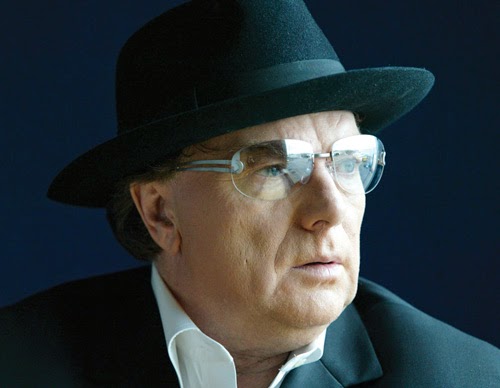
Today's hymn is  Drew Holcomb & The Neighbors – Good Light

Wasting time and wasting money,
you've been acting like a fool.
You spend your whole life fighting for a guarantee,
when all you really need is a friend.

Hey, there's a good light, shining in you. There's a magic in your eyes.
Hey, there's a good light, shining through, and I need it tonight.

You've been looking for rhyme and reason.
The confusion is dragging you down.
You got lost in the chaos.
You got lost in the ashes and dust.
What you needed was someone to trust.

Hey, there's a good light, shining in you. There's a magic in your eyes.
Hey, there's a good light, shining through, and I need it tonight.

We're all stumbling through the darkness.
No one can stay there and still make it through.

Hey, there's a good light, shining in you. There's a magic in your eyes.
Hey, there's a good light, shining through, and I need it tonight.


Drew Holcomb's website is http://www.drewholcomb.com/

Friday, October 17, 2014

Six Cheerful Couplets on Death: Poem


Six Cheerful Couplets on Death
by Michael Blumenthal


Most things won't happen, Larkin said,
But this one will: We will be dead.

The saddest thing, in each context,
Is knowing that we could be next.

Some take the bus, some take the train,
Some die in sleep, the rest in pain

But of one thing we can be sure:
All die imperfect, each impure

Some wishing that they had been better,
Others worse, but no one deader.

Shoes left, like Buddhists, at the door:
Those won't be needed anymore.

"Six Cheerful Couplets on Death" by Michael Blumenthal, from No Hurry: Poems 2000-2012. © Etruscan Press, 2012. From the Writers Almanac. (buy now)

Thursday, October 16, 2014

...a prayer utters itself...


Prayer by Carol Ann Duffy


Some days, although we cannot pray, a prayer
utters itself. So, a woman will lift
her head from the sieve of her hands and stare
at the minims sung by a tree, a sudden gift.

Some nights, although we are faithless, the truth
enters our hearts, that small familiar pain;
then a man will stand stock-still, hearing his youth
in the distant Latin chanting of a train.

Pray for us now. Grade I piano scales
console the lodger looking out across
a Midlands town. Then dusk, and someone calls
a child's name as though they named their loss.

Darkness outside. Inside, the radio's prayer—
Rockall. Malin. Dogger. Finisterre.

"Prayer" by Carol Ann Duffy, from Mean Time. © Anvil Press, 1993. (buy now)

Humble Stumble: Hymns for Imperfect Saints: "With God on Our Side"

I have a started a project in conjunction with my "The Humble Stumble: Lessons on Simplicity, Stillness, Fashion and Faith from a Bad Quaker" book. It's on Spotify -- "Humble Stumble: Hymns for Imperfect Saints."

I'll add a "hymn" a day.

These are not "hymns" in the traditional sense. Rather they're songs that have spoken to my soul in a spiritual sense -- even if they are not "spiritual songs" per se. Though my bias is that that our hearts hunger for beauty and meaning and when artists create something that sings deep in our souls, well, they've created a "hymn," even if it was unintentional.

Suggestions of songs that have spoken deeply to you are welcome!

I'll also post lyrics and video (when available) here.

Today's hymn is  Buddy Miller – With God On Our Side (Buddy's cover of Bob Dylan's song)

Oh my name it is nothin’
My age it means less
The country I come from
Is called the Midwest
I’s taught and brought up there
The laws to abide
And that the land that I live in
Has God on its side

Oh the history books tell it
They tell it so well
The cavalries charged
The Indians fell
The cavalries charged
The Indians died
Oh the country was young
With God on its side

Oh the Spanish-American
War had its day
And the Civil War too
Was soon laid away
And the names of the heroes
l’s made to memorize
With guns in their hands
And God on their side

Oh the First World War, boys
It closed out its fate
The reason for fighting
I never got straight
But I learned to accept it
Accept it with pride
For you don’t count the dead
When God’s on your side

When the Second World War
Came to an end
We forgave the Germans
And we were friends
Though they murdered six million
In the ovens they fried
The Germans now too
Have God on their side

I’ve learned to hate Russians
All through my whole life
If another war starts
It’s them we must fight
To hate them and fear them
To run and to hide
And accept it all bravely
With God on my side

But now we got weapons
Of the chemical dust
If fire them we’re forced to
Then fire them we must
One push of the button
And a shot the world wide
And you never ask questions
When God’s on your side

Through many dark hour
I’ve been thinkin’ about this
That Jesus Christ
Was betrayed by a kiss
But I can’t think for you
You’ll have to decide
Whether Judas Iscariot
Had God on his side

So now as I’m leavin’
I’m weary as Hell
The confusion I’m feelin’
Ain’t no tongue can tell
The words fill my head
And fall to the floor
If God’s on our side
He’ll stop the next war
Copyright © 1963 by Warner Bros. Inc.; renewed 1991 by Special Rider Music


Buddy Miller's website is http://buddymiller.com/

Tuesday, October 14, 2014

Humble Stumble: Hymns for Imperfect Saints: "Lakes of Canada"

Innocence Mission
I have a started a project in conjunction with my "The Humble Stumble: Lessons on Simplicity, Stillness, Fashion and Faith from a Bad Quaker" book. It's on Spotify -- "Humble Stumble: Hymns for Imperfect Saints."

I'll add a "hymn" a day.

These are not "hymns" in the traditional sense. Rather they're songs that have spoken to my soul in a spiritual sense -- even if they are not "spiritual songs" per se. Though my bias is that that our hearts hunger for beauty and meaning and when artists create something that sings deep in our souls, well, they've created a "hymn," even if it was unintentional.

Suggestions of songs that have spoken deeply to you are welcome!

I'll also post lyrics and video (when available) here.

Today's hymn is  Karen Peris – Lakes Of Canada (The Innocence Mission)

Lakes of Canada

Look for me another day.
I feel that I could change,
I feel that I could change.
There's a sudden joy that's like
a fish, a moving light;
I thought I saw it
rowing on the lakes of Canada

Oh laughing man, what have you won?
Don't tell me what cannot be done.
My little mouth, my winter lungs,
don't tell me what can't be done.

Walking in the circle of a flashlight
someone starts to sing, to join in.
Talk of loneliness in quiet voices.
I am shy but you can reach me.
Rowing on the lakes of Canada,
rowing on the lakes of Canada.

Oh laughing man, what have you won?
Don't tell me what cannot be done.
My little mouth, my winter lungs,
don't tell me what can't be done.

Look for me another time
Give me another day
I feel that I could change

Rowing on the lakes of Canada


The Innocence Mission's website is http://www.theinnocencemission.com/

Monday, October 13, 2014

Humble Stumble: Hymns for Imperfect Saints: "When Will I Ever Learn to Live in God"

I have a started a project in conjunction with my "The Humble Stumble: Lessons on Simplicity, Stillness, Fashion and Faith from a Bad Quaker" book. It's on Spotify -- "Humble Stumble: Hymns for Imperfect Saints."

I'll add a "hymn" a day.

These are not "hymns" in the traditional sense. Rather they're songs that have spoken to my soul in a spiritual sense -- even if they are not "spiritual songs" per se. Though my bias is that that our hearts hunger for beauty and meaning and when artists create something that sings deep in our souls, well, they've created a "hymn," even if it was unintentional.

Suggestions of songs that have spoken deeply to you are welcome!

I'll also post lyrics and video (when available) here.

Today's hymn is Van Morrison's "When Will I Ever Learn to Live in God" (it's not available on Spotify, sorry.

"When Will I Ever Learn To Live In God?"

The sun was setting over Avalon
The last time we stood in the west
Suffering long time angels enraptured by Blake
Burn out the dross innocence captured again

Standing on the beach at sunset all the boats
All the boats keep moving slow
In the glory of the flashing light in the evenings glow

When will I ever learn to live in God?
When will I ever learn?
He gives me everything I need and more
When will I ever learn?

You brought it to my attention everything that was made in God
Down through centuries of great writings and paintings
Everything lives in God
Seen through architecture of great cathedrals
Down through the history of time
Is and was in the beginning and evermore shall be

When will I ever learn to live in God?
When will I ever learn?
He gives me everything I need and more
When will I ever learn?

Whatever it takes to fulfill his mission
That is the way we must go
But you've got to do it your own way
Tear down the old, bring up the new

And up on the hillside its quiet
Where the shepherd is tending his sheep
And over the mountains and the valleys
The countryside is so green
Standing on the highest hill with a sense of wonder
You can see everything is made in God
Head back down the roadside and give thanks for it all

When will I ever learn to live in God?
When will I ever learn?
He gives me everything I need and more
When will I ever learn?


Van Morrison's website is http://www.vanmorrison.com/

Sunday, October 12, 2014

Humble Stumble: Hymns for Imperfect Saints: "Hymn"

I have a started a new project in conjunction with my "The Humble Stumble: Lessons on Simplicity, Stillness, Fashion and Faith from a Bad Quaker" book. It's on Spotify -- "Humble Stumble: Hymns for Imperfect Saints."

I'll add a "hymn" a day.  

These are not "hymns" in the traditional sense. Rather they're songs that have spoken to my soul in a spiritual sense -- even if they are not "spiritual songs" per se. Though my bias is that that our hearts hunger for beauty and meaning and when artists create something that sings deep in our souls, well, they've created a "hymn," even if it was unintentional.

Suggestions of songs that have spoken deeply to you are welcome!

I'll also post lyrics and video (when available) here.

For today, since it's Sunday (or Firstday as we ole Quakers say) here's Peter, Paul and Mary – Hymn  I've loved this song since I first heard it (and quickly learned to play it on the guitar) back in the '60s.

"Hymn"

Sunday morning, very bright
I read Your book by colored light
That came in through the pretty window picture

I visited some houses
Where they said that You were living
And they talked a lot about You
And they spoke about Your giving

They passed a basket with some envelopes
I just had time to write a note
And all it said was I believe in You

Passing conversations
Where they mentioned Your existence
And the fact that
You had been replaced by Your assistants

The discussion was theology
And when they smiled and turned to me
All that I could say was I believe in You

I visited Your house again
On Christmas or Thanksgiving
And a balded man said You were dead
But the house would go on living

He recited poetry
And as he saw me stand to leave
He shook his head and said I'd never find You

My mother used to dress me up
And while my dad was sleeping
We would walk down to Your house without speaking


Noel Paul Stookey's website is at http://www.noelpaulstookey.com/
Peter Yarrow's website is at http://peteryarrow.net/

Saturday, October 11, 2014

Humble Stumble: Hymns for Imperfect Saints: "Holy Wars and Politicians"

Jan Krist
I have a started a new project in conjunction with my "The Humble Stumble: Lessons on Simplicity, Stillness, Fashion and Faith from a Bad Quaker" book. It's on Spotify -- "Humble Stumble: Hymns for Imperfect Saints."

I'll add a "hymn" a day.

These are not "hymns" in the traditional sense. Rather they're songs that have spoken to my soul in a spiritual sense -- even if they are not "spiritual songs" per se. Though my bias is that that our hearts hunger for beauty and meaning and when artists create something that sings deep in our souls, well, they've created a "hymn," even if it was unintentional.

Suggestions of songs that have spoken deeply to you are welcome!

I'll also post lyrics and video (when available) here.

Up today is  Jan Krist – Holy Wars And Politicians

"Holy Wars And Politicians"

We try to sort through the unthinkable
not get caught up in the undertow
if and when to compromise 
We say we know what the truth is here 
We say we know the other guy 
only uses the word truth to dress a pack of lies. 

 Chorus 
And God’s name gets dragged into the rhetoric 
and claims get made on heaven’s will 
and a thousand sacrificial lambs get killed 
O God may your will be truly done 
on earth as in heaven 
and save us all from Holy wars and politicians. 

Can you hear my heart is beating 
like a screen door in the wind 
There’s a fear that this whole thing 
might somehow come unhinged 
Tsunami to the left of us 
falling sky off to the right 
they say “you gotta put the fear of God in ‘em 
to set the balance right” 

So can you tell me where the truth resides 
with so much spin and so many lies 
And which argument would Jesus buy 
if Jesus wore my shoes? 
I pray for peace, I pray for mercy 
I pray forgiveness for us all 
for it’s the innocent among us 
who are set to take the fall.

Jan Krist's website is located at http://www.jankrist.net/

Our Great Big American God: A Review


I really wanted to like this book. And I did enjoy it... just not as much as I hoped I would.

I loved the premise -- how we 'Mericans have created God in our image -- or some version of what we think God should be like. I was hoping it would be as good as Stephen Prothero's "American Jesus" (which does much of the same sort of thing, with the Americanization of Jesus.)

Turner gives a lot of information and presents it entertainingly and well. I think many people will really like this book and find it informative (especially the chapter about the "invention of the rapture" (my title) given the release of the new "Left Behind" flick). Maybe I've read too much US religious history to have found this a fully satisfying read -- the problem of having a seminary education that focused on church history.

The other reason I didn't love this book was (and this is hard for a professional smart-ass to say) that it was a little too clever at times. Too many snarky/smart remarks/asides. Yeah, like I have room to talk. Especially since I'm writing the "Bad Quaker's Guide to the Good Life" (although the official title is "The Humble Stumble Toward Grace") -- which is tongue firmly in cheek. This book reminded me that wit is good, too snarky is off-putting to many people, and so humor mixed with whimsy is best. I hope I can find that balance in my book.

Do I recommend this book? Yep. Especially for those who want to see just how our culture affects our faith (would that it was vice versa) and how much of America's "old time" religion is just a tad over 100 years old.  It is also helps us ponder whether God has a hard time recognizing Himself (American!) in our cultural mirror.  I suspect God does.

Friday, October 10, 2014

Humble Stumble: Hymns for Imperfect Saints: "The Gospel of Carlos, Norman and Smith"

I have a started a new project in conjunction with my "The Humble Stumble: Lessons on Simplicity, Stillness, Fashion and Faith from a Bad Quaker" book. It's on Spotify -- "Humble Stumble: Hymns for Imperfect Saints."

I'll add a "hymn" a day.

These are not "hymns" in the traditional sense. Rather they're songs that have spoken to my soul in a spiritual sense -- even if they are not "spiritual songs" per se. Though my bias is that that our hearts hunger for beauty and meaning and when artists create something that sings deep in our souls, well, they've created a "hymn," even if it was unintentional.

Suggestions of songs that have spoken deeply to you are welcome!

I'll also post lyrics and video here.

Up today is  Rickie Lee Jones – The Gospel of Carlos, Norman and Smith

Didn’t you hear?
Black is a criminal,
White is a crime,
Poison is the pen
Writing down this children’s nursery rhyme.
Didn’t you see him standing next to me?
The seeds of change have grown,
We don’t have to hide anymore.

Lololololololo, that means trouble from the other side,
Lololololololo, maybe the trouble of a hopeful heart.

It doesn’t take much to see
If you’re looking for an enemy,
Greed and apathy
Spell the letters of our name.
You sit and laugh at other people,
Making money off their shame and sorrow,
Waiting for tomorrow to fix itself.

Lololololololo, that means trouble from the other side,
Lololololololo, maybe the trouble of a hopeful heart.

It’s a dark night to feed a stranger,
I don’t have enough to feed myself.
I keep trying to believe in believing
In something I can’t see
From where I stand,
I pull it with my faith,
With the smile on my face.

It’s gonna take a lot more
Than you might be used to,
Who’s to blame for not standing up for them
When it was not in style?
When hope is the color of a man
The color of love is the color that can
Stand for something.

Lololololololo, that means trouble from the other side,
Lololololololo, may be trouble of a hopeful heart.
Lololololololo, the trouble of a hopeful heart,
A hopeful heart, it could be a hopeful heart.

Thursday, October 09, 2014

Humble Stumble: Hymns for Imperfect Saints: "A Light in the Window"

I have a started a new project in conjunction with my "The Humble Stumble: Lessons on Simplicity, Stillness, Fashion and Faith from a Bad Quaker" book. It's on Spotify -- "Humble Stumble: Hymns for Imperfect Saints."

I'll add a "hymn" a day.

These are not "hymns" in the traditional sense. Rather they're songs that have spoken to my soul in a spiritual sense -- even if they are not "spiritual songs" per se. Though my bias is that that our hearts hunger for beauty and meaning and when artists create something that sings deep in our souls, well, they've created a "hymn," even if it was unintentional.

Suggestions of songs that have spoken deeply to you are welcome!

I'll also post lyrics and video here.

Up today is  Carrie Newcomer – A Light in the Window

A Light in the Window 
There is always a light shining in the darkness. 

Looking out at the night 
Beyond the driver’s wheel,
Curving hips made of snow 
In the winter fields.
There’s a house set way back 
Where a lamplight glows,
Like star out in the cold,
Filled with people I'll never know,
Who left a light, 
Left a light in the window.

What would I change if 
The choice were mine? 
I was doing the best 
I knew at the time.
And every door that opened 
And door that closed,
All the things that made me grow,
Sent me off down another road,
Off to search for a light, 
For a light in the window
.
Now what's old has already passed away 
But the new is too new 
to be born today.
So I'm throwing out seeds 
On the winter snow,
As a sharp wind begins to blow,
Standing here on a new threshold,
I can see a light, 
There's a light in the window..

The world is made of stone,
And the world is made of glass.
The world is made of light,
And its moving very fast.

We pass from mystery to mystery 
So I won't lie 
I don't what happens 
When people die.
But I hope I see you walking slow,
Smiling wide as sunrise grows,
I drop my map with a 
thousand folds,
In the distance I see it 
glow,
I can see a light, 
There’s a light in the 
window.

Words and Music By Carrie Newcomer


Carrie Newcomer's website is at http://www.carrienewcomer.com/

Wednesday, October 08, 2014

Humble Stumble: Hymns for Imperfect Saints: "All My Favorite People are Broken"

I have a started a new project in conjunction with my "The Humble Stumble: Lessons on Simplicity, Stillness, Fashion and Faith from a Bad Quaker" book. It's on Spotify -- "Humble Stumble: Hymns for Imperfect Saints."

I'll add a "hymn" a day.

These are not "hymns" in the traditional sense. Rather they're songs that have spoken to my soul in a spiritual sense -- even if they are not "spiritual songs" per se. Though my bias is that that our hearts hunger for beauty and meaning and when artists create something that sings deep in our souls, well, they've created a "hymn," even if it was unintentional.

Suggestions of songs that have spoken deeply to you are welcome!

I'll also post lyrics and video here.

Up today is Over The Rhine – All My Favorite People

All my favorite people are broken
Believe me, my heart should know
Some prayers are better left unspoken
I just want to hold you and let the rest go

All my friends are part saint and part sinner
We lean on each other, try to rise above
We are not afraid to admit we are all still beginners
We are all late bloomers when it comes to love

All my favorite people are broken
Believe me, my heart should know
Awful believers, skeptical dreamers, step forward
You can stay right here, you don't have to go

Is each wound you've received just a burdensome gift
It gets so hard to lift yourself up off the ground
But the poet says we must praise a mutilated world
We're all working the graveyard shift
You might as well sing along

Cause all my favorite people are broken
Believe me, my heart should know
As for your tender heart, this world's going to rip it wide open,
It aint gonna be pretty, but you're not alone

All my favorite people are broken
Believe me, my heart should know
Awful believers, skeptical dreamers, you're welcome
Yeah, you're safe right here, you don't have to go

Cause all my favorite people are broken
Believe me, I should know
Some prayers are better left unspoken
I just want to hold you and let the rest go


Over the Rhine's website is at http://overtherhine.com/

Tuesday, October 07, 2014

Humble Stumble: Hymns for Imperfect Saints: "Show Me The Place"

I have a started a new project in conjunction with my "The Humble Stumble: Lessons on Simplicity, Stillness, Fashion and Faith from a Bad Quaker" book. It's on Spotify -- "Humble Stumble: Hymns for Imperfect Saints". http://open.spotify.com/user/1272246762/playlist/44GFZ4SnDCBCVwX9uMOdHU
I'll add a "hymn" a day.

These are not "hymns" in the traditional sense. Rather they're songs that have spoken to my soul in a spiritual sense -- even if they are not "spiritual songs" per se. Though my bias is that that our hearts hunger for beauty and meaning and when artists create something that sings deep in our souls, well, they've created a "hymn," even if it was unintentional.

Suggestions of songs that have spoken deeply to you are welcome!

I'll also post lyrics and video here.

First up is Leonard Cohen's "Show Me the Place."

LEONARD COHEN
Show Me The Place

Show me the place where you want your slave to go
Show me the place, I've forgotten, I don't know
Show me the place for my head is bending low
Show me the place where you want your slave to go

Show me the place, help me roll away the stone
Show me the place, I can't move this thing alone
Show me the place where the word became a man
Show me the place where the suffering began

The troubles came, I saved what I could save
A thread of light, a particle, a wave
But there were chains so I hastened to behave
There were chains so I loved you like a slave

Show me the place where you want your slave to go
Show me the place, I've forgotten, I don't know
Show me the place for my head is bending low
Show me the place where you want your slave to go

The troubles came, I saved what I could save
A thread of light, a particle, a wave
But there were chains so I hastened to behave
There were chains so I loved you like a slave

Show me the place
Show me the place
Show me the place

Show me the place, help me roll away the stone
Show me the place, I can't move this thing alone
Show me the place where the word became a man
Show me the place where the suffering began

Monday, September 29, 2014

"Cows, I pray you fresh cool breezes...": A Poem


A City Girl Feeds Country Cows


With handfuls of mown grass, I reach out to the shy cows
in their graze-hungry fields who resist my offering,

retreat backwards from the barbed fence that shocks my hand.
I am a New Yorker, dumb to the ways of cow, eagle, horse,

familiar with the aggressive ways of the pigeon who pimps
for crumbs, the squirrel who sprints across window panes,

fleets of cockroaches who invade the night.
Now, I see cows corralled in their own muck,

stopped by fences just beyond lush green
meadows, assailed by armies of flies.

Cows, I pray you fresh cool breezes and plentiful
rich pastures. Cows, I pray you kind masters.

"A City Girl Feeds Country Cows" by Sandra Becker, from Imperfect Matter. © Word Tech Editions, 2013. . (buy now)

Friday, September 26, 2014

God's Good Green Earth: Doing Unto Others, part 4: Humble Stumble

For me the easiest thing about caring for the earth is the how. The why is harder at times. Well, if not harder, than more complex. While I can search the scriptures for words about why I should care for the earth, some of them seem a bit of a stretch. I mean to read about Jesus’ ruling the wind and the waves doesn’t really tell me that I need to! And, yes, "The earth is the Lord's, and everything in it, the world, and all who live in it; for he founded it upon the seas and established it upon the waters." (Psalm 24:1-2; cf. Psalm 89:11; 1 Corinthians 10:26), but if it’s the Lord’s do I need to care for it? Besides other Bible verses are used by people (especially in the King James version) to justify using up all the resources – “And God blessed them, and God said unto them, Be fruitful, and multiply, and replenish the earth, and subdue it: and have dominion over the fish of the sea, and over the fowl of the air, and over every living thing that moveth upon the earth.” (Genesis 1:28)

Of course, "You must keep my decrees and my laws.... And if you defile the land, it will vomit you out as it vomited out the nations that were before you." (Leviticus 18:26, 28) seems a pretty clear (and graphic) justification for taking care of this planet.

For me, in all my badness, there is an even greater reason – it’s the connection between earth care, peace, looking for that of God in others rooted in Jesus’ own life and example. Jesus ministry reflected a commitment to the poor and oppressed. Much of his work consisted of caring for the poor and oppressed in the society of his day. He fed, healed, and cared for the less fortunate – and confronted the privileged and their resources for not doing so. He more than hinted that we, as his followers, were to participate in the kin-dom of God – the interrelationship of all creation that brings universal shalom. Taking care of the earth is part of that participation.

How? Well, that may not be apparent on the surface. But when you stop to think that we in the so-called “developed” countries on this planet use and misuse resources, it’s obvious we have to be causing real harm to those unfortunate enough to have been born in less developed places. Remember earlier when I talked about the seeds of war in our possession? Especially as it relates to the Congo? One report says that thirty percent of kids in the Congo drop out of school so they can go work in the mines. The minerals mined are used mostly used to produce goods consumed in the western world. In the United States. In Indiana. In my home. My “need” of coltan dragged from the earth by the extreme methods they use means their lack of education.

That’s in addition to the huge disparity of my resource use compared to a person in Zambia. The United States, for example, has only five percent of the world population but uses twenty percent of the world’s energy. (http://www.worldpopulationbalance.org/population_energy) So let’s say that a family in India has seven children. That family still uses a lower percentage of the world’s energy than an American family with one child! I’m not certain that was what Jesus had in mind for us in ushering in the Kingdom of God.

This is not about blame. Or guilt. It is about being aware of how our actions impact those whom we will never see – and rarely think about. It’s about being the Friends of Jesus in a way that is possible now that wasn’t when he walked the shores of Galilee.

Think of it. We now know that what we do impacts others around the world in a way that generations before us could not. A smart bomb dropped in Syria while we’re watching “The Voice” on television is witnessed shortly after it happens – though we rarely count innocent dead that are collateral damage. And rarely count the resource costs – natural and economic resources – that it took to make that bomb “smart”, flying it around the world, and drop it on the people below. All of this resource “use” takes food from the mouths of poor children. Including the poor children in our own neighborhoods.

And while it’s easy to decry government spending on such things, what about our own need to have inexpensive clothes, food, and cars? How do we care for the poor and oppressed while simultaneously taking their labor and natural resources?

********

Wow. That was preachy, wasn’t it? Sorry. I get that way sometimes – mostly about what I need to be preached at about. Guess you’re just sort of collateral damage.

Thursday, September 25, 2014

God's Good Green Earth: Divine Inaction, Godly Action, or Spiritual LOAFing, part 3: Humble Stumble

"Brent is a gentleman farmer. He lives on 50 acres being reclaimed into prairie and woodlands. That mean he raises grass and trees. Now, as I understand it, grass grows on its own. And trees do, too. So he gets to sit and watch them and read books and think deep thoughts. My thought is -- 'That's the kind of farmer I want to be!'"

That’s how I was introduced prior to giving a speech one time. Everybody chuckled, of course, including me. It was a witty introduction. But part of it nagged at me a bit and I remember it from time to time whilst working the farm this weekend.

Yes, the thousands of trees that have been planted over the years will grow on their own -- so long as they’re kept free of weed entanglement and damage from deer who like to munch on tender young shoots or rub the bark of young trees. That means weeding, mowing, and tying strips of dryer fabric softener sheets on each one (the deer hate the scent as much as I do. So do mice, which is why I tie them in the engine compartment of my truck, so they don’t eat all the wires up. Which they did once!). Let me tell you, that's a lot of cutting and tying. And the prairie has to be burned to kill off the woody growth and destroy weeds. Some, though, don't seem to mind the fire. So the bazillion thistle rosettes (that's a baby thistle, I've learned) that sprouted after the fire, have to be dealt with.

That, in part, is what I’m called to do. But before I was called to that work, I had to be convinced it was important spiritual work. Otherwise, I was just being another do-gooder. There’s nothing wrong with that, but I’m not a natural do-gooder. So for me to be one that, God sorta has to kick my rear end and say “Pay attention, Brent. You need to do this.”

My first conscious efforts toward earthcare as intentionally spirit work began small. Little things like getting rid of incandescent lightbulbs, wrapping the water heater in a cover, buying a high mpg car, buying energy efficient appliances when the old ones needed replaced. Tiny steps for a tiny soul.

As my soul grew, and an opportunity came to build a house, we designed it to be energy-efficient from its 6 inch thick insulated sidewalls, 8 inch thick insulated roof, triple insulated windows, geo-thermal heating and cooling system and more. Now this wasn’t cheap. Which kept grating my desire to live simply. It wasn’t that I couldn’t afford it. I could. But rubbed up against another faith matter – earth care/simple living.

Which is the thing about the Quaker way. Jesus’ way. It’s not so easy sometimes. The values it gives us sometimes fit easily together. Other times, not so much.

What’s a bad Quaker to do?

Actually, the question is what is this bad Quaker to do? There is no one answer that fits all of us. Which is part of the delight and frustration of being Friends of Jesus. We are called to determine, with divine assistance, what is ours to do in this world. About peace. Justice. Truth. Simplicity. Care for the earth. Please, God, can’t you just type out instructions and send them to me???

The joy in this comes from, instead of being told and just having to follow set directions, discovering and working with God in the redemption of this world and our souls. We are lead into new places of growth as we discern how we can be more responsible consumers, what wasteful household habits we have, how can we use resources more responsibly, whether to join a community supported agriculture effort, have our church create a community garden in a "food desert”, work for national legislation that regulates or prohibits the use of genetically engineered food, or just LOAF (buy food that is Local, Organic, Animal-Friendly, and Fairly produced and traded).

Of course, it’s not that there’s not stuff to do. There are plenty of things. Rather, it’s what is God calling you to do. Not what are you being guilted into by other people of faith (or even a bad Quaker), but what feels right in your life. What fits – not what is forced. If it doesn’t feel right to you to create a wildlife sanctuary in your backyard and/or on church property, then don’t. Not until you feel it is right and fit and from God. If a leading to make your own naturally based cleaning products*; composting all organic waste — and recycling paper, cardboard, cans and bottles — to reduce the greenhouse gas emissions associated with landfills, sell your car and rely solely on a bike or public transit, and so on is truly from God it will persist. It won’t let you go and will work on your soul. It will also
  • come with a sense of joy
  • feel life giving, not life draining
  • give you the power and will to actually do it!


Wednesday, September 24, 2014

God's Good Green Earth: Priuses or Pruii?, part 2: The Humble Stumble


Every summer almost 1,500 Quakers converge on a college campus somewhere in North America for a week that’s known as Gathering. In 2014 it was at California University of Pennsylvania. Confusing, eh? What made it even more confusing was that California, Pennsylvania is not some major metro area. People were a mite worried about finding the place. On Facebook, one wag wrote, “Just look for the line of Priuises with peace and earth care bumper stickers and follow them.”

Good advice. Sure enough when I looked around the cars coming in the percentage of Pruii was huge. Quakers do probably buy more Priuses (or is that Pruii – I’ve never been able to figure out the plural for Prius) percentagewise than any other faith group. It’s not because they’re trendy (the car or us) but because of this whole care for the earth thing. Because we love God we love God’s good earth. It is God’s creation in the same way that each one of us is. And so we try to the call to be good stewards of this planet during our lifetime and for those who come after us, remembering, as John Woolman said, that “to impoverish the earth now to support outward greatness appears to be an injury to the succeeding age.” That’s why so many Friends were among the 400,000 folks who participated in the People’s Climate March in NYC recently. It’s not because they’re good people (well, they are) or it’s a good political stand, it’s because their faith led them to do it.

I often joke that, as a Quaker, I’m not a member of an organized religion. If you ever come visit us and stick around awhile, you’ll see what I mean. We’re always waiting to see what God is telling us to do and we often have various takes on that which we have to sift through to discern what is God telling us to do and not us telling us what God wants us to do. Confusing, eh? Then we’ll appoint a committee with a subcommittee with a working group to discern if the discernment was right on. Then it’ll come back up the Quaker ladder for further discernment.

One thing that we’ve actually gotten to work on, though, is earthcare. At a personal level, that’s one reason you see so many hybrid or high mpg vehicles parked in front of the Quaker meetinghouse. While the percentage of the farmers among us has tumbled in the last century, those who remain often practice responsible farming practices. My friend Katrina runs the family farm her parents founded in the 1970s. Meeting Place Organic Farm is in southwest Ontario, Canada and Katrina's family farms organically with Belgian horses and has a mixed livestock operation designed to nourish the soil and produce food in an ecologically sustainable manner. While that may sound vaguely Amish, trust me, I’ve never seen bubbly Katrina dressed anywhere close to a staid young Amish woman. If she’s wearing black, it’s a fashionable little black dress and she’s stepping out for a night on the town. And step out on the town Katrina does.

In my case, the land we steward has all been taken out of production agriculture and converted to tall grass prairie or forest. This is a big change for me – a man who once saw this land as a potential development and a possible source of monetary wealth. All because of faith and an increasing awareness of the fragility of our eco-system and the vanishing species here in the Midwest. It is rather affirming to see butterflies, for example, in places where there weren’t any fewer than ten years ago.

Besides individual efforts, we actually have some groups that work directly on the issue. Quaker Earthcare Witness takes spirit-led action to address the ecological and social crises of the world from a spiritual perspective, emphasizing Quaker process and testimonies. My friend Katherine, a writer like me, is their publications person. She works with QEW because

Ever since I was a little girl, I’ve met God in nature—in the light, in the sky, in trees, flowers, and animals. I’ve had a reverence for all life because God loved it, and even as a child I would make it my job to clean up streams (and even a drainage ditch by my house) because I knew caring for creation was caring for God.

I have a number of other Friends friends who work with the Earth Quaker Action Team which endeavors to build a just and sustainable economy through nonviolent direct action. They’re leading a strategic effort to get PNC Bank out of the business of financing mountaintop removal coal mining. They use nonviolent direct action to shine the light on PNC Bank’s lead role as one of the primary financiers of this devastating surface mining practice which has destroyed more than 500 mountains and 2,000 miles of river and streambed in Appalachia.

My friend (and Friend) Eileen Flanagan is active in this group.

I’d been growing increasingly concerned about climate change when, in February 2011, I had a strong intuition to attend the Philadelphia Flower Show. Although none of the friends I’d invited were available, I kept feeling that I needed to go on a particular day, which turned out to be exactly when EQAT was protesting PNC Bank’s financing of companies engaged in mountaintop removal coal mining. PNC was also a major sponsor of the Flower Show, so here were all these Friends—several of whom I knew—singing and handing out fliers in front of the PNC pavilion. There was something about their mixture of joy and courage that really touched me, so I grabbed a stack of flyers and joined them. I felt that God had given me the nudge I needed.
What many people call “climate justice” really integrates the testimonies of peace, equality, simplicity, integrity, and stewardship. Through my work with EQAT, I’m learning how to confront injustice while still honoring “that of God” in those who are upholding the system. I have a growing appreciation for the early Friends who were willing to actively confront the wrongs of their own society, even when it meant ostracism or jail time. Their faith inspires me!

They are not bad Quakers like I am, but they’re certainly bad ass. And, again, all of this comes from a spiritual – not a “do-gooder” – base.

These folks aren’t a bunch of wacked out aging hippie types either. If you saw them on the street, you think they were as normal as you are. And they pretty much are. Except for Katrina and she’s normal in her own unique way. What they each have in common is that they’ve heard the voice of the Spirit calling them to action in caring for the earth – and often that call is tied in with their views on peace, simplicity, equality, and more.

What canst thou say about caring for the earth as a spiritual practice? More importantly, what canst thou do? Even more importantly, what canst I do?

Monday, September 22, 2014

God's Good Green Earth: The Humble Stumble

  
Photo by Brent
The produce of the earth is a gift from our gracious creator to the inhabitants, and to impoverish the earth now to support outward greatness appears to be an injury to the succeeding age.
 -- John Woolman, 1772


How I’ve become a conservation minded fellow is beyond me. It must be evidence of God’s slow but steady work in my soul – sorta like the slow steady work of the Colorado River on that which is now known as the Grand Canyon. I only hope that someday my soul is as beautiful as that natural masterpiece.

It’s not that I disregarded the earth. Indeed I was a Cub Scout, a Boy Scout, an Indian Guide, and Christian Service Brigade member. As kids, my cousins and buddies often camped out in the summer, albeit often in our city backyards. My granddad and dad and his friends went camping and fishing and dragged me along at times, often to the Hocking Hills in southern Ohio. I had appreciation for natural beauty, but was a bit disconnected from it much of the time. I lived in a city in an era before urban hiking/biking trails and intentional green spaces meant part of the blacktopped playground was painted with industrial green paint. It was also a time that we thought our biggest danger was the God-less Russians and their H-bombs and not our own over extension of natural resources and pollution of air and water.

Doh!

I started waking up to the need for care of the earth as a freshman in college (I began waking up to a lot of things that year!). On April 22, 1970 (just a few weeks before the Kent State massacre) the first Earth Day was held. It seemed like a good thing. Who could be against taking care of our planet. Even our Evangelical Quaker college observed it (not by letting us out of class, however). Plus it was sorta fun to dress up and have a mock funeral for the Earth. Bill Roman donned a cassock and carried a book of prayer while a group of other students served as pall-bearers and grave-diggers. But conservation seemed a hippie-ish, radical sort of thing. Never mind that I had grown up attending John Burroughs Elementary School, named for one of the most famous naturalists and conservationists for his day. And the man who said, “I still find each day too short for all the thoughts I want to think, all the walks I want to take, all the books I want to read, and all the friends I want to see.” Which well reflects how I feel.

Still, for years, despite a long time involvement in caring for the earth by many of my friends who are Friends, doing so myself not much on my radar. I mean, I tried to do no real harm – which was pretty easy since I didn’t own any smoke-belching, pollution producing factories. Nor did I worry about my oil platforms in the Gulf of Mexico and elsewhere leaking and spilling thousands of gallons of crude into the ocean. I had no oil platforms. I didn’t strip mine. I didn’t mine at all. I didn’t use massive amounts of fertilizer to increase crop production. The only crop I had was usually the grass growing on the city lot around my house.

And now I find myself living in an Energy Star rated house that’s extremely energy efficient and heated and cooled by geo-thermal system. And that’s just the outward manifestation of the gradual inward change.

What happened?

Faith happened. That’s what. The slow arc of God’s grace and teaching has brought home to me this idea that it’s not enough just for me to bemoan (and smirk a bit about) the Cuyahoga River catching on fire the summer between high school and college. Nope, I actually have to do something.

If, that is, I believe in God and want to be a Friend of Jesus.

"A bowl of soupy, faded, funeral fruit..." : A Poem


Fruit Cocktail in Light Syrup

by Amy Gerstler

Rocket-shaped popsicles that dyed your lips blue
were popular when I was a kid. That era got labeled
“the space age” in honor of some longed-for,
supersonic, utopian future. Another food of my
youth was candy corn, mostly seen on Halloween.
With its striped triangular “kernels” made
of sugar, wax and corn syrup, candy corn
was a nostalgic treat, harkening back to days
when humans grew, rather than manufactured,
food. But what was fruit cocktail’s secret
meaning? It glistened as though varnished.
Faint of taste and watery, it contained anemic
grapes, wrinkled and pale. Also deflated
maraschino cherries. Fan-shaped pineapple
chunks, and squares of bleached peach
and pear completed the scene. Fruit cocktail’s
colorlessness, its lack of connection to anything
living, (like tree, seed or leaf) seemed
cautionary, sad. A bowl of soupy, faded, funeral
fruit. No more nourishing than a child’s
finger painting, masquerading as happy
appetizer, fruit cocktail insisted on pretending
everything was ok. Eating it meant you embraced
tastelessness. It meant you were easily fooled.
It meant you’d pretend semblances,
no matter how pathetic, were real, and that
when things got dicey, you’d spurn the truth.
Eating fruit cocktail meant you might deny
that ghosts whirled throughout the house
and got sucked up the chimney on nights
Dad wadded old newspapers, warned you
away from the hearth, and finally lit a fire.

Saturday, September 20, 2014

Red and Yellow Black and White, Allies, part 4: The Humble Stumble


“Damn Hispanics,” muttered the cab driver as we drove west on Indianapolis’ Washington Avenue. We had just climbed off the train which had arrived at 5:00 a.m., too early to call family for a ride. It was the middle of a hotter than usual July, the air conditioning on the train had gone out, we were hot, tired, hungry, and ready for showers and some sleep. We were not ready for a racist screed.

At least I wasn’t. But that’s what we got as we made our way out through the city past buildings proclaiming bodega, foto estudio, restaurant, and more. “They’re ruining our city,” he moaned. “I wish they’d all just crawl back to Mexico.”

Now I’d like to say that I rose up in righteous indignation and told him to be quiet. Or better yet, engaged him in a serious dialogue about bigotry and race in Indianapolis. But I didn’t. I leaned my head against the window, shut my eyes, and try to tune him out.

It wasn’t one of my proudest moments.

But it was learning one. It was one that reminded me that seeing that of God in others was more than just an internal thing. Sometimes it require action or speaking out.

Sigh.

As an introvert, I’d really just as soon keep things to myself. But if I truly do believe that seeing that of God in others means treating others as if they were equals is something I needed to actively put into practice. After all, if someone slighted Nancy or my kids or my closest friends, then I wouldn’t hesitate to rush to their aid or defense. I wouldn’t sit quietly by. How could I be quiet if I believed that the Hispanics in the neighborhood I had just passed through were as equal and Nancy and I in our cab?

Double sigh.

Especially disconcerting, the more I thought about it, was that I remained silent that day while being a position of power. Yes, I had the power of being a customer. I had the power of a tip. I had the power to complain to his employer. And a fair amount of that power came from the position in society that I have – an educated, middle class white heterosexual male. That privilege may not be something I aspire to or want, but society affords it to me regardless. While I believe, and try to live by the belief, that I am no better or worthy than any of the other people in whom God’s light shines, the fact is that I am treated differently than some of those other people. I first noticed this in a real way when I walked into the place I bank in Philadelphia. I was wearing sunglass and a hat (to keep my little bald head from getting sunburned). There was a sign there that said “Please remove any hats and sunglasses.” I saw some Black men in front of me, holding their hats in their hands. I got in line with my hat firmly atop the great white expanse and my sunglasses on. This was hard, as I typically am a rule keeper not a rule breaker. But I wanted to see what might happen. The guard, who was Black, looked at me. But didn’t say anything. Some younger Black men came in and were promptly asked to take off their hats and sunglasses. I completed my transaction, was treated courteously, all with hat on head and sunglasses on my face. No one said a word.

I do this everytime I visit that bank. Nobody’s said anything to me yet. While men of color are asked to doff their hats and glasses.

Which is why I’m finding it important, as a spiritual witness to my belief of that of God in all people, be an ally to those who see not being treated equally because of their race, class, sexual orientation, ability, gender, and much more. Being an ally is an action that puts me in touch with that of God of in others in a tangible way by helping me develop an understanding of the personal and institutional experiences different from myself, but equally embued with God’s Light.

Part of that is pondering what would I experience now if I were a person of color, a woman, disabled, gay? Again, not as a political exercise, but as a child of God.

How can I act as if I truly do believe there is that of God in every person? Should I
  • step into a situation in which a person of color is being ill-treated by someone who looks like I do?
  • speak out about a situation in which I don’t appear to have any vested interest: 
  • interrupt a comment or joke that is insensitive or stereotypic toward a group
  • commit to the personal spiritual growth I needto be genuinely supportive. 
  • promote a sense of inclusiveness and justice in the places I work – and worship!
  • create an environment that is hospitable for all – including at church
  • share power inclusively
  • create opportunities for trust
  • form authentic relationships with those who are “other”

If I’m going to be a friend of Jesus – which I endeavor to be! – I need to learn to be a vocal, public witness for his love of all people. Not easy for an introvert, who likes to work quietly, even on Christian justice issues. So no more quiet taxi rides for this bad Quaker. If I get another bigoted taxi driver, I hope to engage him or her as a beloved child of God in a gentle, but direct conversation about how I really don’t want to be exposed to such thinking.

Either that or I’ll keep quiet… and walk the ten miles home.

Sigh. Why isn’t following the way of Jesus easier?

Friday, September 19, 2014

Red and Yellow Black and White, They are Precious in His Sight, part 3: The Humble Stumble


"Don’t look at me in that tone of voice.” If I had a five dollar bill for every time I’ve heard Nancy say that to me, well, I’d have a lot of five dollar bills. Looking at her in that tone of voice is one of my failings – it’s a look that conveys irritation, exasperation, and frustration. A look nobody should get. Especially someone I love. Especially someone who I can easily (well, most of the time anyhow) see that of God in.

So, before taking on seeing that of God in everyone in the entire world, it might be good for me to practice at home. After all, if I can’t see it there, chances are I’m not going to be able see it in some white supremacist or Islamic jihadist. Especially since I find both of those types really annoying and just plain wrong in their views.

Well, maybe seeing God in a white supremacist or Islamic jihadist would be easier. After all, they are examples of people Iwill most likely not run into often. Or have to live with. They are abstractions to most of us. Wheareas our spouses, kids, neighbors, coworkers and other regular contacts are people that inhabit our lives with all their imperfections.

Yes, imperfections. The idea of looking for that of God in everyone doesn’t deny that the people in whom God dwells are imperfect. They’re human, too! Just like we are. Imperfect. Just like we are.

The first step in seeing that of God in anyone is seeing them as fully human as we see ourselves. And accepting them in that humanity. they are trying to live up to the leadings of God (even if they don’t call it by that name) as we are. Being a horrible human being is rarely on anybody’s agenda. “I think I’ll get up today and be a real son of a bitch,” said no one ever. They may have gotten up and acted like a real son of bitch – but rarely, in their thinking, were they one. They had their reasons for doing the things they did. Fully justifiable (in their minds and hearts) for doing them. Hmmm, just like I me!

Part of the reason for looking for that of God in others is that whole love thing. It is really hard for me to be hateful to someone I love. No matter how good a mad I’ve got on. So long as I look at someone through the eyes of “the mad”, I can keep that hate heat banked and smoldering for quite a while. And I don’t really “look” at them anyhoo. I look all around them. Above them, below them, beside them. But not into their eyes. When I look into their eyes, I begin to look into their soul, their eyes being the window of their soul, as Shakespeare said. When I look into their soul, that’s when I see that of God there – loving them, guiding them,

Another reason is to be able to call them into living up to it. In the same way we do ourselves. As we pay attention to promptings of God within our hearts and souls, we begin to live more fully into Spirit’s presence. We know that it sometimes helps to have someone help us by reminding us, too. Like when I’m at work and say something completely outrageous that is not quite true and my good friend Deborah cocks her head and gives me a look that says, “Really? Really??” Sigh, no, not really. I could be a little more careful with the truth.

There are two things that I’ve learned that help me see that of God in others.

  • Making caring for others a daily practice. I come first. I am the center of my universe. Except, of course, I’m not. I need to balance my needs and wants with those of others – especially those others I spend lots of time with. As I care for people, they become less abstract and more real as children of God, worthy of the love, respect, and care I desire for myself. And by being kind, I model the deep, deep love of God.
  • Practicing gratitude – being thankful for the people who share life with me, helps me see God’s providing, watchful care over me. God has blessed me with these people in my life. All of them. I can whine about the annoying ones (and shut down God’s promptings of love in my own live) or I can be grateful for the gift of life and its varied experiences. Wow, that sounds pretty Jack Handy-ish, doesn’t it! But it’s true. Studies show that people who are in the habit of expressing gratitude are more likely to be helpful, generous, compassionate, and forgiving—and they’re also more likely to be happy and healthy. Wow, seeing that of God in others has health benefits?? Who knew!

Thursday, September 18, 2014

Red and Yellow Black and White -- That of God in Them?! Really??,part 2: Humble Stumble

Guided by the Light of God within us and recognising that of God in others, we can all learn to value our differences in age, sex, physique, race and culture. … Jesus stressed the unique nature and worth of each individual. … Personality, sex, race, culture and experience are God’s gifts. We need one another and differences shared become enrichments, not reasons to be afraid, to dominate or condemn. -- Meg Maslin, Britain Faith and Practice


I find it easy to accept the Quaker belief that the Bible tells us there is that of God in other people – at least I find it easy to accept on the surface. That’s because when I first think about it I hear “there is that of God in other people like me.” So yeah, sure, there is that of God in other white male Quakers. I’ll even concede white female Quakers. Quakers of all races. Even Quakers of all ages (though some of the YAFs (Young Adult Friends) are hard to take by an OAF (Old Adult Friend) like me). Heck, I even believe that about other Christians. Well, most other Christians. I’m not sure about some of those on the….

Most of the time I can sorta get my head around how that might be translated in a vague, goodwill sense like the old, politically incorrect phrase, “the brotherhood of man.” After all, it was long said of Quakers that we believed in the Fatherhood of God, the brotherhood of man, and the neighborhood of Germantown (Philadelphia, where many of us settled back in the day).

Actually, though, it’s a radical, life-changing concept. If, we really think about it, that is. If, as George says, we’re to answer that of God in everyone then … um… that means that there is that of God in everyone. Everyone. Every One.

It means God treasures us equally (even if my friend Katie does wear a t-shirt that says “Jesus Loves Everybody… but I’m His Favorite.”). We are all God’s favorites. It’s easy – on a good day – to see myself as one of God’s favorites. On a really good day I can see my family and friends as God’s favorites. On my rare best days I can feel a sense that all 7.157 billion of us on this planet are. Usually just a sense, though. I mean, seriously, God loves EVERYBODY as much as God loves me?? Yikes. If that’s true, I’d better start treating people better. From my family to that panhandler outside Reading Terminal.

Realizing that God loves us all equally is good for me. It begins to teach me humility. While I’ve often joked that I’m proud to be a humble Quaker, I struggle with ego. I need to heed the words of Paul, “Do not think of yourself more highly than you ought…” (Romans 12:3 (NIV))

This “that of God in everyone” was even more radical when Quakers first discovered it in Scripture. It was the seventeenth century after all.. What this spiritual concept meant in daily life and ministry was that they began seeing people differently and treating them differently. For one, women. At the time the Quakers came into being, there continued discussions about whether women even had souls. The Quakers affirmed that they did and what’s more they could preach and teach and travel in ministry away from their families every bit as much as any man could.

Of course, as I said, it was the seventeenth century and their views weren’t universally embraced – except that a woman had as much right to be imprisoned or hung for her faith as any man. Just watch the Mary Dyer segment on “Drunk History” if you don’t believe me (Danger: bad language in it!).

And the equality was, to be honesty, a different kind of equality than today. It was the almost four hundred years ago after all. It didn’t immediately usher in universal suffrage or equal rights. But it was a start – and way radical for its time. Samuel Johnson's opinion of a female Quaker preacher was, "Sir, a woman's preaching is like a dog walking on his hind legs. It is not done well; but you are surprised to find it done at all."

Besides treating women more equally, they also took Galatians 3:22 to heart – “There is neither Jew nor Gentile, neither slave nor free, nor is there male and female, for you are all one in Christ Jesus.” (NIV) And so they trips around the world to call them to Light of Christ that was already in them. They traveled throughout the Americas, the Caribbean, Europe, and more. In 1658 she felt led to visit the Ottoman Empire and share her faith with the Sultan Mehmed IV. In 1658!! Traveling on ship and then by foot, when she she reached the Sultan’s armed camp, she asked for audience with the Sultan, saying that she was an ambassador of ‘The Most High God’. She was granted an audience, testified to the “Universal Light,” and then, declining his offer of an armed escort, she made her way, alone, back to Constantinople and, eventually, England. There she wrote:

“Now returned into England ... have I borne my testimony for the Lord … there is a love begot in me towards them which is endless … Nevertheless, though they be called Turks, the seed of them is near unto God.”

This belief is why Quaker kids (and adults sing)

There's a Light that was shining

when the world began,

And a Light that is shining in the heart of man:

There's a Light that is shining

in the Turk and the Jew,

And a Light that is shining, friend,

in me and in you

and why Quaker have been in the forefront of such things abolition of slavery, women’s rights and suffrage, equal rights, immigration reform, and much more. Not that we’ve gotten it right every time – we haven’t always practiced the equality we preached (see Fit for Freedom, Not for Friendship: Quakers, African Americans, and the Myth of Racial Justice by my friend Vanessa Julye and Donna McDaniel for a number of good bad examples). We still don’t get it right. Many Quaker meetings are exceedingly white and middle class. But many of us are trying to live up to the ideal. And knowing what should be done and not always doing it are part of the humble stumble. Even Paul recognized that:

I do not understand what I do. For what I want to do I do not do, but what I hate I do. … For I have the desire to do what is good, but I cannot carry it out. For I do not do the good I want to do, but the evil I do not want to do—this I keep on doing. – excerpts Romans 7:15-19 (NIV)

One of the things to note about this passage, and the Quakers failings in equality (and other areas!), is that the failure is in the action – the carrying out of the conviction. The acting on the axiom. So we begin, despite failures, again and again to see that of God in others. All others. It means believing that all people have that of God in them -- white, black, yellow, Christian, Hindu, Muslim, Buddhist, agnostic, atheist, rich man, poor man, beggar man, thief, deaf, sighted, blind, paraplegic, geniuses, Down’s syndrome, European, Asian, homeless woman, smart-mouthed teenager, bad driver, and on and on


But how do we live that out?

Wednesday, September 17, 2014

Red and Yellow Black and White, They are Precious in His Sight, part 1: The Humble Stumble

Answering that of God in everyone…George Fox


“The that of God in me is really having a hard time seeing the that of God in thee today,” I said once to a Quaker whom I was finding more than a little bit annoying. And I’ve thought that a bunch more than once. “That of God in everyone” is one of those quirky Quaker concepts based in scripture. John 1:9 specifically. “The true light that gives light to everyone was coming into the world.” Everyone being the operative word. “Red and yellow, black and white” as the old children’s Sunday school song says. Also straight, gay, bi, man, woman, trans, boy, girl, Christian, Jew, Muslim, atheist, and on and on. We Quakers think it’s part of the Gospel, not some clunky add-on.

As radical Friends of Jesus, the early Quakers took that as a literal truth. If I’m enlightened by the light of Christ and the Bible says that everyone else is, then I’d better start looking at them with enlightened eyes. Sounds simple. But it’s often difficult. Sometimes I have a hard time recognizing that of God in myself – let alone in someone who just cut me off on the freeway or jumped in front of me in the boarding line of a flight. You know, the important things of life!

And yet that’s what George Fox, one of the first Friends, told us we were to do – to answer that of God in everyone. Actually he said we were to walk cheerfully over the earth answering that of God in everyone.

Cheerfully?! Wonder if he and Jesus would settle for grudgingly answering that of God in everyone? Nah, probably not.

Which is why I had to change my attitude recently when someone called and wanted to come for a visit. “I’d just like to get to know you better,” he said. Well, I had been out mowing and running a line trimmer in the August heat. I was sweaty, grass covered, and almost finished. I’d have to finish the job some other day and go get a shower and dress in clean clothes.

I was not a happy Quaker camper. I was job obsessed and not in the mood for chatting. But, I thought as I looked across the yard and saw Nancy weeding, it’s not all about me. I thought of that while looking at her because she tells me that all time. So I put the trimmer up, took a shower on, applied some cheerfulness along with my deodorant, and put on my freshly cleaned, grass free glasses – ready to look for that of God in Nancy and my newish friend. And in everyone else I might encounter that day.

I say “that day” because this is something I seem to need to learn anew everyday.

Friday, September 05, 2014

"...I'm now brilliantly hydrated..." Poem


Bottled Water


by Kim Dower


I go to the corner liquor store
for a bottle of water, middle
of a hectic day, must get out
of the office, stop making decisions,
quit obsessing does my blue skirt dash
with my hot pink flats; should I get
my mother a caregiver or just put her
in a home, and I pull open the glass
refrigerator door, am confronted
by brands—Arrowhead, Glitter Geyser,
Deer Park, spring, summer, winter water,
and dearly the bosses of bottled water:
Real Water and Smart Water—how different
will they taster If I drink Smart Water
will I raise my IQ but be less authentic?
If I choose Real Water will I no longer
deny the truth, but will I attract confused,
needy people who'll take advantage
of my realness by dumping their problems
on me, and will I be too stupid to help them
sort through their murky dilemmas?
I take no chances, buy them both,
sparkling smart, purified real, drain both bottles,
look around to see is anyone watching?

Both real and smart my insides bubble
with compassion and intelligence
as I walk the streets with a new swagger,
knowing the world is mine.

"Bottled Water" by Kim Dower, from Slice of Moon. © Red Hen Press, 2013. (buy now)

Friday, August 22, 2014

On Keeping Silence in the Church

“As in all the churches of the saints, the women should keep silence in the churches.” (I Corinthians 14:33-34)

I know a woman named Silence
She said her parents did not know her very well
when they named her.
They thought Silence was a beautiful name
for a girl.
She stands up in her pew and speaks her mind:
When a couple in church announces the birth of a girl
Silence says, “I think we should all clap for that.”
When a foreign student speaks about war in Ethiopia
Silence says, “Keep telling us about that, we need to hear.”
When someone complains about the church
needing air conditioning
Silence says, “That’s why I bring my fan.”
I love this woman named Silence
And I think we should definitely
Keep Silence in the church.


"On Keeping Silence in the Church" by Margalea Warner
Source: Daughters of Sarah magazine

Add your thoughts at inward/outward

Saturday, August 09, 2014

When True Simplicity Is Gained, final: Humble Stumble

A Concluding Word … or Few Hundred

Another form of simplicity is less about possession than it is about scheduling. Sometimes we get so busy, even doing God’s work, that the center of our lives are cluttered. What difference does it make if we live in plain house with few possessions and drive plain black Priuses if we do not have simplicity in our soul? The possessions there, more and more committee chairmanships, community activities and so on, that appear altruistic to others, but which in fact we wear as sort of a badge of pride. We must be important – look how busy we are.

So, if we are to begin to live the testimony of simplicity, we must first simplify our own inner and outer lives. We must take time to live in that holy center. We must calm our lives and learn to breathe.

I am not saying it is easy. It is not. I have a terribly difficult time doing it. It is much easier to run, run, run than it is to sit. But when I run, run, run I find my whole life coming unbalanced – family time, work productivity, emotions, physical health. It is when I take time to pray and wait that I find my rhythms, inner and outer, begin to slow and becoming more soothing than rock and roll ragged.

So that’s where we must begin – inside. Take time to be holy – and a holy simplicity will follow. And with that simplicity will come a joy that is most remarkable. We know, in our innermost lives, that things do not bring happiness. But we are a bit slower to learn the lesson that activity, even religious activity, does not bring happiness either. What brings joy into our life is when we give up, abandon ourselves to God and allow the Spirit to simplify our lives and direct our actions.

That means we must surrender self. That’s not easy. I would much rather be in control, or fool myself into thinking that I am, of my life than to turn it over to anyone else – even God. That’s one reason I hate flying. I have to sit there and let someone else control my destiny. I don’t trust the pilot. The larger question is do I trust God? Do I trust enough to let go – even when I feel that if I do then life will go careening out of control and I may crash upon its rocks? If I am honest, often times the question is no. And that there is fulfillment, however spiritually unhealthy, in all the activity I work so hard to keep up. The question Van Morrison asks “when will I ever learn to live in God” remains mine and is at the heart of living the testimony of simplicity.

Jesus tells us in that we are not to worry – about what we drink, eat, look like or wear. In listing those things he cuts directly to the chase and points out the things that consume us. We worry to much about the inconsequential. He’s not talking here to the starving children or displaced homeless ones. He’s talking to us good religious people. Jesus says if we seek first his kingdom, that is, surrender our ideas of what we are to be about to the larger ideas that God has in store for us, then all the important things will be ours as a matter of course. When we learn to simplify our lives by surrendering to God, then we find we have all we need even when it is not all we want. Simplicity of direction, that of following as closely as possible, to our savior and leader, brings with it a beauty to life we will find hard to imagine.

“It is easy to let ourselves slip into action for action’s sake,” says Henry van Etten. “Without noticing it, we unconsciously seek to enlarge our sphere of activity ... unconsciously neglecting day after day to restore our spiritual strength, we find ourselves eventually at the bottom of a dry well, with nothing but our wretched little human powers. Yet we had begun our work ... with the highest motives, we even had the intimate sense of response to the divine call; yes, it was with a following wind that we launched out, God filling the sails, and Christ at the helm.”

“Even so, bit by bit, we have transformed what was a divinely appointed task into work on a merely human level, with all its shortcomings. And why did things end up like that? Because we neglected our inner life, because we were taken up with action, because we were too tired to pray, too tired to take part in meetings for worship, too tired to refresh our spiritual strength by reading ... We must be able to stop in the midst of our urgent task for something even more urgent; prayer, self-composure, meditation in silence, worship.”


The practice of simplicity must begin with an ordered inner life. Live is not to be poor and bare, destitute of joy and beauty. There is much to celebrate and welcome into our lives. But when we learn to live ordered lives from the Divine Center, the superfluous details vanish and we will experience a simplicity that makes for beauty.

The Shakers sang “Tis a gift to be simple, Tis a gift to be free.” May we ask God today for the gift of inner simplicity that makes for freedom and beauty.